Bathroom Trends: Wood Vanities & Natural Palettes
Explore wood vanities and natural bathroom palettes, with practical storage, finish and maintenance decisions for your remodel.

Design Watch · Bathroom Trends · October 2026
A wood vanity can give a bathroom warmth without making every surface compete for attention. The useful question is how that look will work with your storage, existing light and daily care. This month’s bathroom trends feature turns a natural palette into a practical selection process for a remodel.
By BALLENCIACE Construction. Prepared with AI assistance; sources checked October 22, 2026. All five images are AI-generated design concepts, not completed projects or manufacturer product photographs.
Hero concept: the vanity provides the main texture; the surrounding pale surfaces support it.
What the research supports and what this edition adds
NKBA’s 2026 Bath Trends public release, published November 11, 2025, reports a survey of 688 industry respondents. Wood-faced vanities received 62% and painted finishes 53% in its popularity findings; light neutrals and brown-based greens also feature in the summary.
The public research catalog checked October 22, 2026 still listed that as the latest Bath Trends edition. We used the public release, not the full member report. This is our October interpretation of annual research, not a new monthly survey, a measure of Tampa Bay demand or an NKBA endorsement.
Our contribution is the decision sequence below: choose a focal material, test two supporting combinations, then check the cabinet and construction scope before buying. A preference in a professional survey does not decide what belongs in your home.
Let one material lead the room
Start with the element you are least likely to change: the vanity, existing floor or a tile you already intend to retain. If wood grain is the focal point, place a quieter countertop beside it before adding patterned walls or a busy floor. This is a composition option, not a rule that every bathroom must follow.
For a smaller bathroom, our first sample combination would be a light wood-grain front, a warm white countertop and a pale neutral floor. Try muted green in a towel or another easily changed accent before committing to it across a large fixed surface. If you prefer stronger contrast, test a deeper wood tone against a light counter while keeping the remaining samples restrained.
Neither combination is automatically better. Bring both into the actual room and ask which still looks intentional beside the finishes you will keep. A photo taken in a bright room cannot tell you how a selection will look in your own bathroom.
Choose the inside of the vanity with the outside
Before comparing door styles, put your everyday items on a table: towels, toothbrush supplies, grooming tools and the bottles that usually crowd the counter. Group them by who uses them and how often. Then ask to see the usable space inside the proposed cabinet as well as its overall width.
A side drawer can be a useful home for small items. A sink compartment needs a separate check against the actual basin, drain and supply layout. Do not assume an attractive drawer arrangement will fit around your plumbing. Open drawers and doors on the proposed layout and check their relationship to the entry door, shower and toilet.
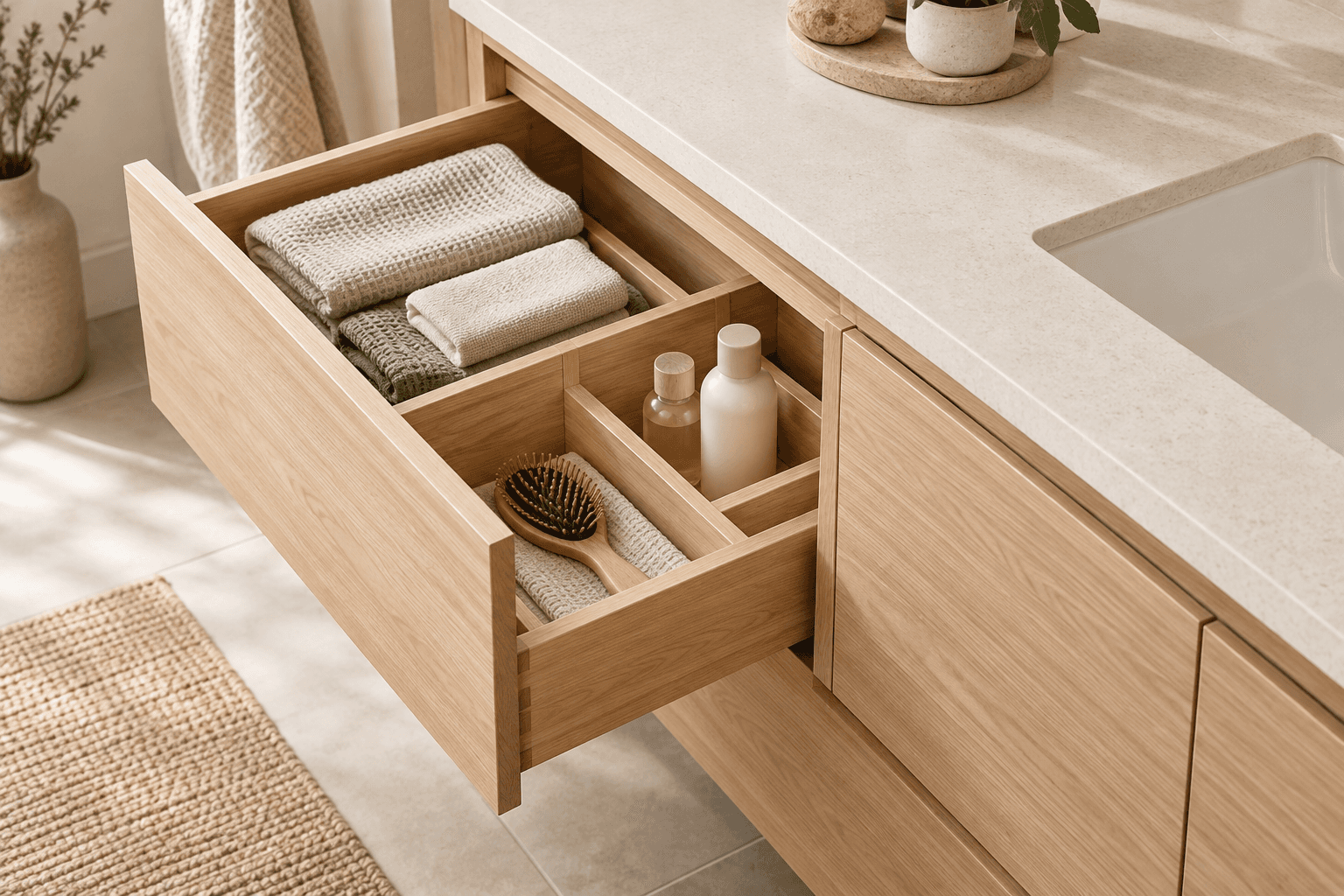
AI storage concept: inventory the items you use, then check usable drawer dimensions and the separate plumbing compartment. This is not a cabinet specification.
Ask what the quote includes: cabinet construction, drawer hardware, organizers, countertop, basin, faucet and installation. A photographed accessory may be optional. If the preferred vanity changes the plumbing location, identify that work before comparing its price with a like-for-like replacement.
Separate the wood look from the maintenance promise
“Wood vanity” does not describe every part of a cabinet. Ask the supplier to identify the face material, cabinet box, exposed edges, finish and approved care instructions for the exact product. The appearance of grain is not proof of solid wood construction or water resistance.
As one manufacturer example, KraftMaid’s care guidance says to avoid excessive moisture, wipe up spills and dry surfaces after cleaning. It also warns against leaving wet towels over cabinet doors. Follow the selected vanity manufacturer’s own instructions rather than transferring another product’s cleaning or warranty claims.
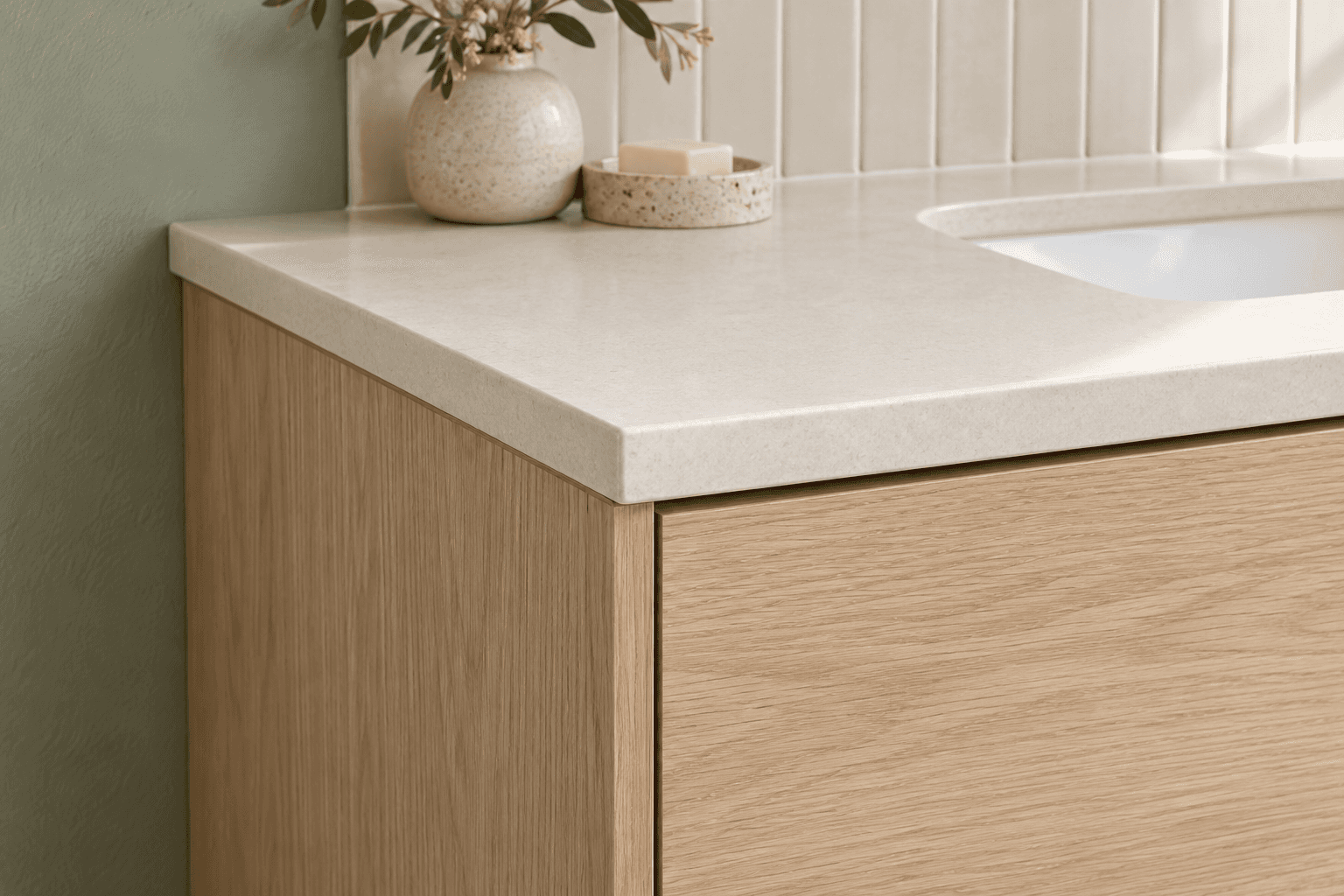
AI finish concept: compare the countertop, cabinet edge and adjacent finishes together. The illustration does not certify materials, sealing or water resistance.
At selection time, examine how the countertop meets the cabinet and where splashes are likely to land. Ask how exposed edges and adjoining wall surfaces will be finished. Include a review of existing ventilation in the remodel discussion; a color or cabinet finish does not establish that the room handles moisture adequately.
Compare a flat front with a textured alternative
A smooth slab front lets the grain do the visual work. A fluted front adds repeating lines and shadow. We are showing these as design alternatives; the NKBA finding above does not establish fluting as a separate measured trend.
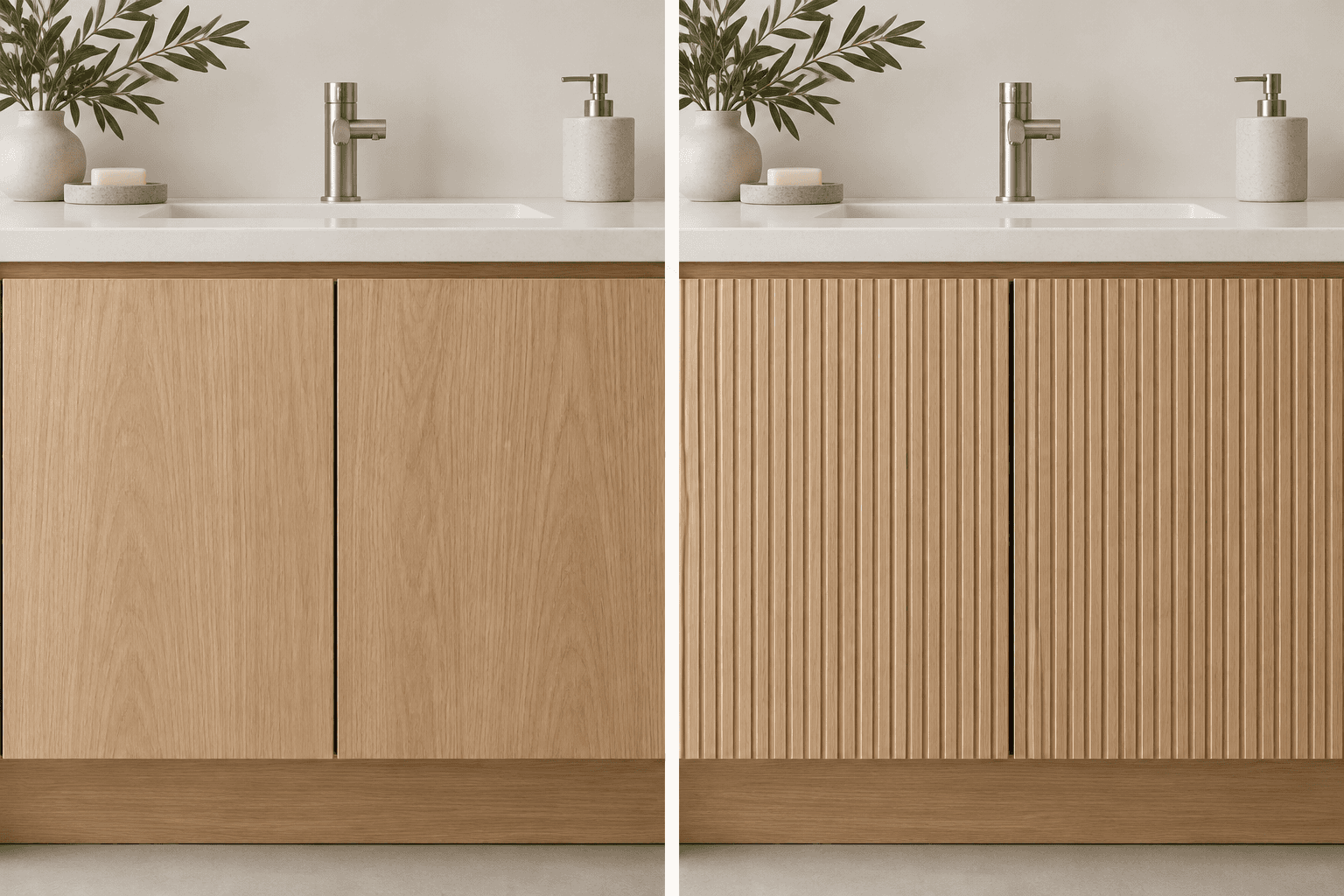
AI design comparison: smooth and fluted fronts create different visual rhythms. Test a physical sample for grip and cleaning access before choosing.
If you like a textured door, handle a sample and try the manufacturer’s recommended cleaning method across its grooves. Compare that experience with a flat sample. Check how pulls or finger grips feel, whether the chosen finish continues around the edges, and how a replacement front could be matched later.
Choose the version whose appearance and upkeep both suit you. Neither the photograph nor the word “natural” proves that one cabinet is more durable or better built.
Build a palette you can verify in person
Use the board below as a relationship exercise: one wood tone, one light background, one quiet floor texture, one accent and one metal finish. These are conceptual swatches, not exact paint colors, named stone or a shopping list.
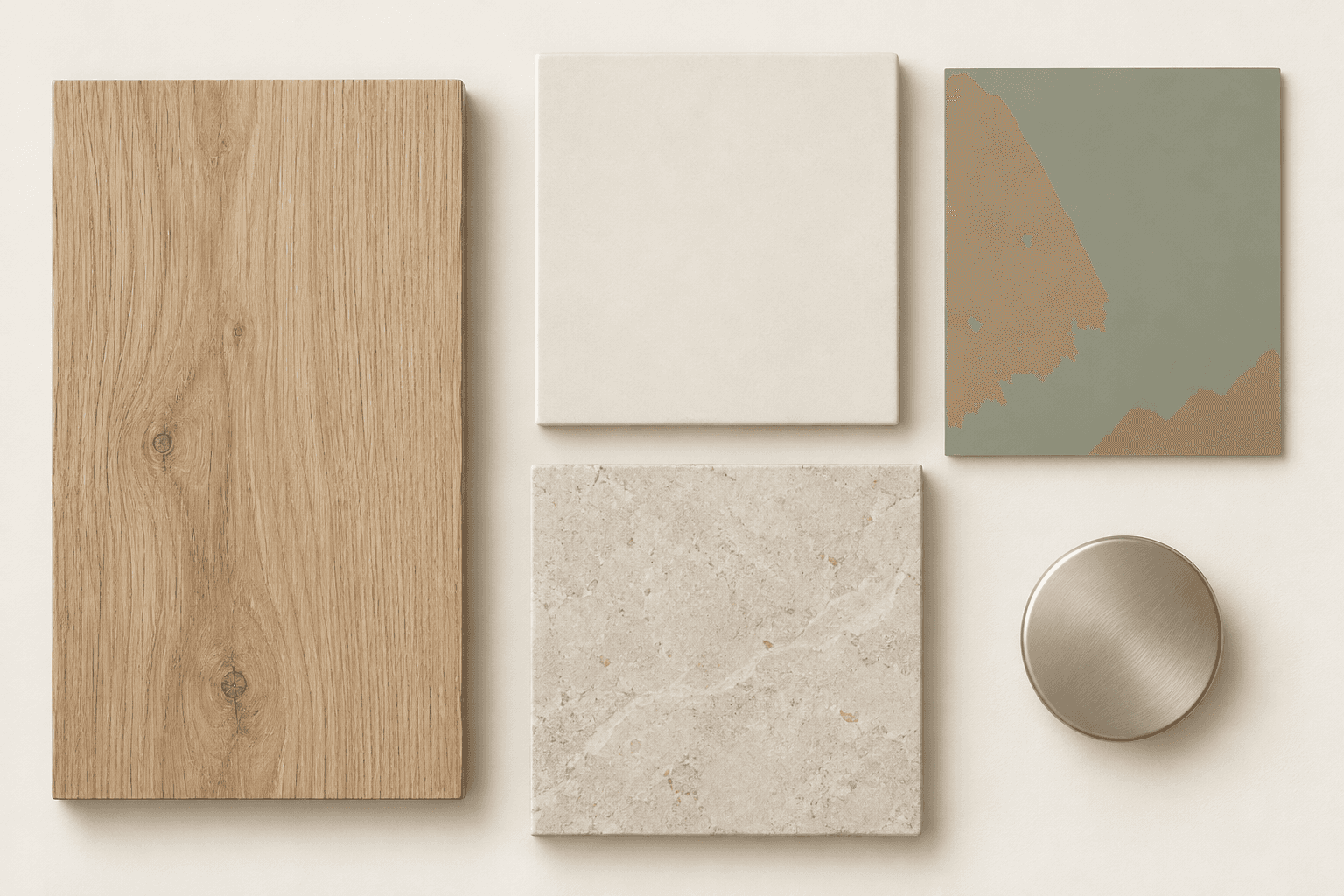
AI palette concept: five approximate material relationships, not named products or exact colors. Compare real samples in the room before ordering.
Place physical samples beside one another in their intended orientation: floor material flat, cabinet sample upright and countertop horizontal. Review them in daylight and with the lighting you expect to use in the evening. Photograph the set as a reminder, but make the final decision with the samples in front of you.
If two surfaces seem to clash, change one at a time. Start with the easiest selection to revise, keeping already approved or retained materials in view. Record the manufacturer, product, finish and sample identifier once you settle on the combination. Screen renderings cannot guarantee the delivered color or natural variation.
Bring these decisions into the remodel scope
Save this short selection record for your consultation:
Keep: existing finishes and fixtures that will remain.
Lead: the vanity or other material that anchors the palette.
Store: the actual items and usable drawer space required.
Verify: product construction, care instructions, samples and finish details.
Price: cabinet, top, basin, faucet, organizers and installation separately enough to understand what is included.
Resolve: plumbing changes, electrical and lighting work, ventilation review and any unfinished scope assumptions.
A vanity update can stay focused, or it can sit within a larger bathroom remodel. If your plan also changes the shower, use our curbless-shower planning guide. Compare floor choices in our tile, LVP and hardwood guide, and use the bathroom quote-comparison guide to make scope differences visible.
BALLENCIACE works with homeowners planning bathroom remodels and design-build projects in St. Petersburg, Clearwater and Tampa. Contact us to discuss your bathroom with your sample combinations, storage priorities and the decisions you want resolved before ordering.